


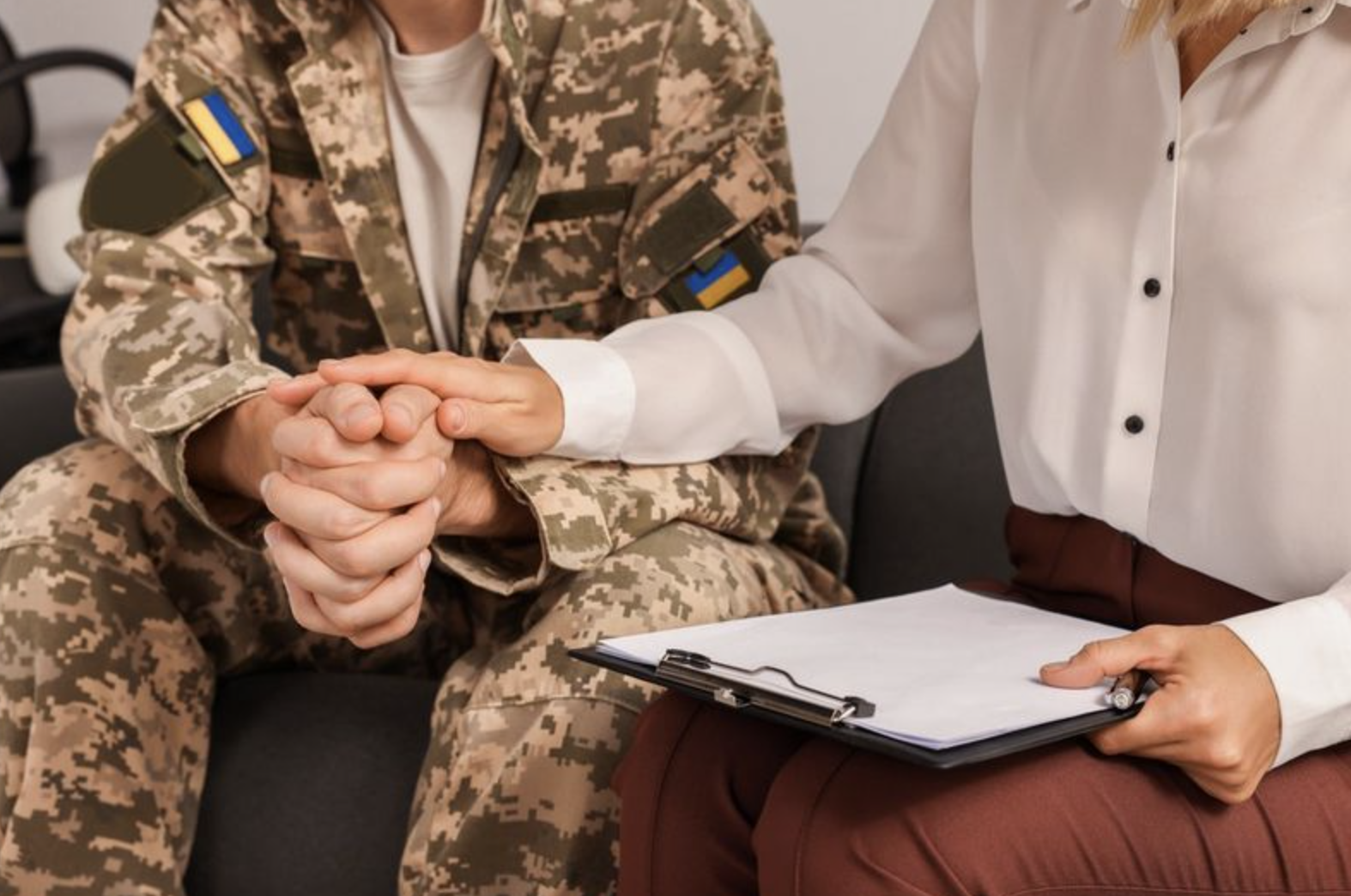
Wounds, treatment and 100,000 UAH: why the military have been proving the obvious for years
War changes a person very quickly.
Just yesterday, it was a combat trip, positions, orders, and comrades-in-arms.
Today, it's an operating room, a hospital, bandages, rehabilitation and endless medical documents.
And along with this is another reality that is usually not spoken about aloud: the struggle to get their own legitimate benefits.
Paradoxically, after being wounded, a soldier is often forced to fight a second time. Not at the front, but with bureaucracy, orders, certificates, military units and formal refusals.
And it is at this point that a person who is physically undergoing treatment is faced with a system where one incorrectly issued certificate can cost hundreds of thousands of hryvnias.
When the state recognizes the right to payments, but there is still no money
Today, a fairly clear case law has already been established: if the injury is related to the defense of the homeland and the treatment is confirmed by proper documents, the serviceman retains the right to additional remuneration.
And it's not just about direct participation in hostilities.
The courts have repeatedly confirmed the right to payments:
- during inpatient treatment;
- during rehabilitation;
- during the period of treatment abroad;
- when moving between hospitals;
- during a leave of absence for treatment after a serious injury.
It would seem that the mechanism should have been working automatically for a long time.
But in practice, it is after being wounded that the most difficult part begins.
A formal mistake that costs tens of thousands
In most of these cases, the problem does not arise from a lack of entitlement to payment.
The problem arises because of the documents.
No order has been issued.
An incorrectly executed certificate.
Error in the wording of the causes of injury.
No confirmation of transfer between hospitals.
Unrecorded treatment abroad.
Missed rehabilitation period.
Sometimes a serviceman is simply not included in orders for UAH 100,000.
Sometimes payments are stopped after a few months of treatment.
Sometimes the command formally responds: "there are no grounds".
At the same time, the soldier himself often does not even realize where the problem arose.
Because the reason may be hidden in a single line of a document that a person after surgeries and hospitals is physically unable to check on their own.
The hardest part of being wounded is not always the treatment itself
Lawyers who work with military cases know one thing well: a wounded serviceman usually does not have the resources to fight a legal battle.
A person undergoes surgery.
Restores mobility.
The HLC is waiting.
He moves between hospitals.
He is learning to live after the trauma.
And at the same time, it should:
- write reports;
- collect references;
- control orders;
- analyze accruals;
- correspond with the military unit;
- monitor changes in legislation;
- prepare appeals and complaints.
That is why in cases of payments, a lawyer is not a "person for the court".
This is actually a separate mechanism to protect the military from the system that shifts the bureaucratic burden to the wounded person.
What a lawyer actually does in such cases
From the outside, it may seem that a payment case is just a lawsuit.
In fact, the main work begins long before the trial.
Lawyer:
- Analyzes orders and medical documents;
- checks the certificates of the medical examination board;
- establishes a causal link between the injury and the performance of service duties;
- requesting documents through lawyers' requests;
- works with hospitals and military units;
- checks the correctness of the certificate of injury circumstances;
- Controls the timing of the VLC;
- checks the correctness of the calculation of cash security;
- forms the evidence base for the court.
And very often, it is after the appearance of a lawyer in a case that a military unit begins to react completely differently.
Why these cases are becoming a separate category of legal struggle
Injury compensation cases have long ceased to be just "financial disputes".
In fact, this is a question of the attitude of the state system to a person who was injured while defending the country.
Because when a soldier is forced to prove the obvious for years after an operation, the problem is no longer just in the documents.
The problem is that bureaucracy is often stronger than common sense.
And that is why judicial practice is so important today.
Courts are increasingly explicitly stating that formal deficiencies cannot automatically deprive a serviceman of the right to proper payments if the fact of injury and treatment is confirmed by proper evidence.
What is critical after an injury
In such situations, time is of the essence.
After being wounded, it is important for a serviceman to be well:
- keep all medical documents;
- supervise the issuance of a certificate of injury;
- do not ignore the passage of the VLC;
- check payment orders;
- control the inclusion of additional remuneration in orders;
- disagree with verbal refusals;
- seek legal assistance in a timely manner.
Because practice shows that most often, military personnel lose their payments not because of a lack of rights, but because of lost time, errors in documents, or inaction of officials.
Conclusion.
After being wounded, a person has to be engaged in treatment and recovery.
But the Ukrainian reality often forces soldiers to go through another exhausting procedure in parallel - to prove their right to what the law already guarantees them.
And that is why legal support in such cases is not about "formal services of a lawyer".
It is about protecting a person who has already paid too high a price for the state's right to exist.
The author of the article: Assistant lawyer at AXELLEGAL Svitlana Stepashko - on contract law, corporate and military law.